
A letter from an artist to the doctors she was afraid of
Three questions to feel less helpless at your next appointment
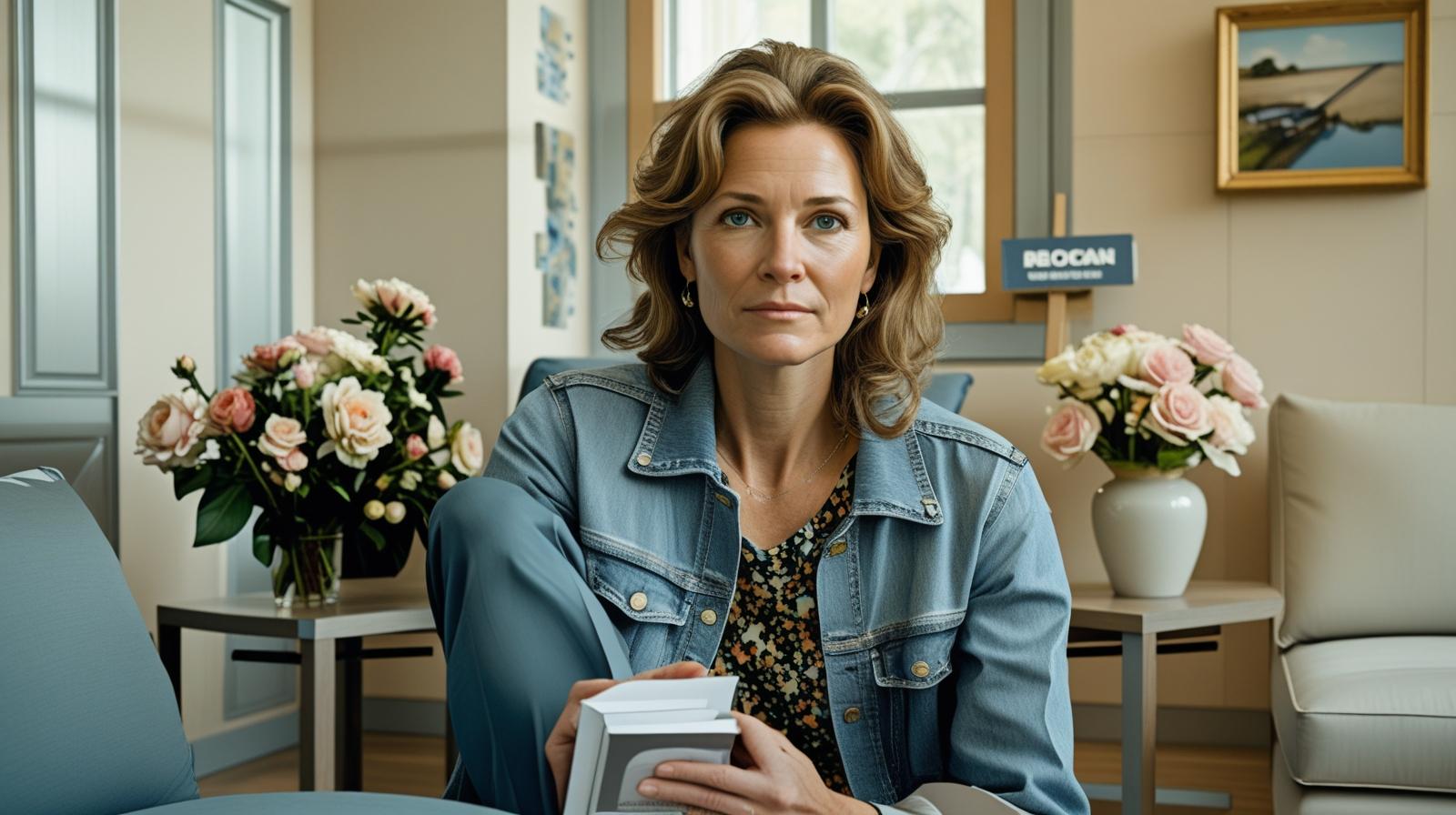
Hi, this is Lily Marigold.
I’m writing this to the “collective doctor,” but really I’m thinking of you if any of this feels familiar: you postpone appointments, doom‑scroll symptoms at night, finally make it to the office… and then say almost nothing. You walk out thinking, “Why didn’t I ask what I wanted to ask?”
Sometimes it feels to me like time moves differently in medical hallways. You sit in a chair with your phone or your file in your hands, and inside it’s as if someone erases your notes: all the thoughts you prepared crumble into dust. The doctor’s words land like headlines, loud and clear, and your own words suddenly go quiet, as if someone turned their volume down.
For a long time I thought this meant: “Something is wrong with me, I just don’t know how to talk to doctors like an adult.” Now I see it differently: it’s just my inner director staging the scene as “I’m small, they’re big.” My whole practice now is slowly rewriting that script, giving myself more lines, more questions, and permission to pause.
This letter is not about erasing fear. It’s about giving your nervous system a few handles: how to sort through scary health content, how to ask questions when you freeze, and how to leave an appointment feeling a little less like an object and a little more like a partner.

How I sort scare‑stories from useful info
When I read about health now, I imagine every paragraph as a tiny injection into my nervous system. I use three simple filters:
- Who is speaking?
Is this backed by real research, clinical guidelines, or a professional organization, or is it just a confident voice with nice branding and no sources? - Is uncertainty allowed?
Phrases like “may,” “not in everyone,” “data is mixed” usually sound less dramatic but more honest to me than “always,” “never,” or “100% guaranteed.” - What do they suggest I actually do?
If I’m left only with shame and “you ruined everything,” with zero concrete steps, it’s a scare‑piece. Helpful information can be uncomfortable, but it still leaves at least a small doorway: “here’s what we can try / check / track.”
You can borrow these filters for yourself. They don’t turn us into doctors, but they do turn down the volume on panic before we even step into the office.
Three questions to bring to your next appointment
Imagine your appointment as a scene where not only the doctor and the computer are in the frame, but you are too. These three questions help keep you in that frame when your mind wants to disappear:
1. “What other things could be causing these symptoms?”
Why this helps:
- you don’t latch onto the single scariest possibility,
- you hear a few options (from simpler to more serious),
- you understand what exactly you are ruling in or out together.
It shifts the conversation from “what’s wrong with me?” to “what are we considering and checking?”
2. “What can we do or track over the next few weeks?”
Big instructions like “change your lifestyle” can freeze the brain. Ask for 1–2 concrete steps:
- a specific test or follow‑up,
- a simple habit change,
- a short symptom or sleep log.
You leave not with “just relax more,” but with a rough sketch of a plan your nervous system can hold onto.
3. “When should I come back or seek urgent help?”
Anxious brains love all‑or‑nothing: “it’s nothing” vs “it’s a disaster.” Ask your doctor to draw three lines:
- what counts as a normal or expected course,
- what would mean “make a regular follow‑up,”
- and which specific signs mean “don’t wait, come in or call right away.”
This doesn’t delete anxiety, but it turns formless fear into clearer signals: here I watch and wait, here I book, here I don’t hesitate.
I still don’t love waiting rooms and bright screens. But when I walk in with these questions and with at least a few filters for what I’ve read online, I feel less like a helpless patient and more like a person who’s allowed to be part of the conversation.
If you don’t remember anything else from this email, you can tuck this one sentence into your pocket:
“I’m allowed to ask what else this could be and when I should come back.”
Would you like a one‑sentence intro at the very top like “If you dread doctor appointments, this one’s for you,” or do you prefer to keep the current softer opening?
Listening to the body,
Lily Marigold