Your brain's worst week of the year starts Sunday
— Inside Body Art — |
Hi, this is Lily. |
It's 3 a.m. and the house is quiet. You're not awake. Not really. But you're not deeply asleep either — you're in that shallow place where the body rests but the brain doesn't quite finish what it was doing. What was it doing? |
 |
The discovery | |
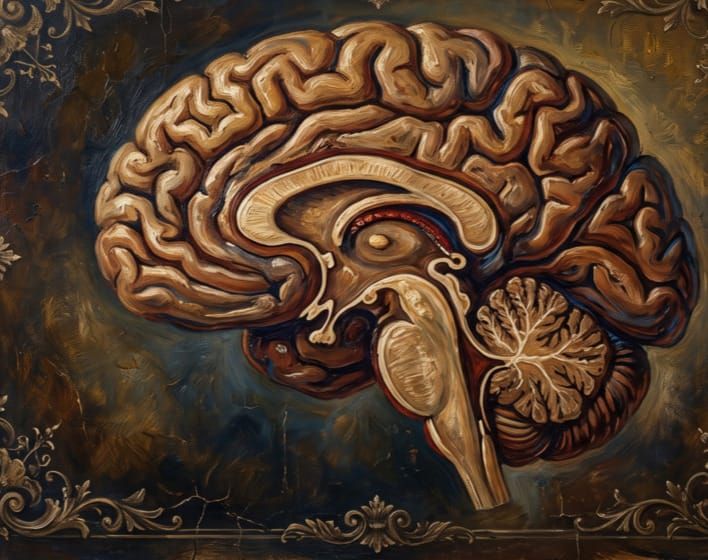
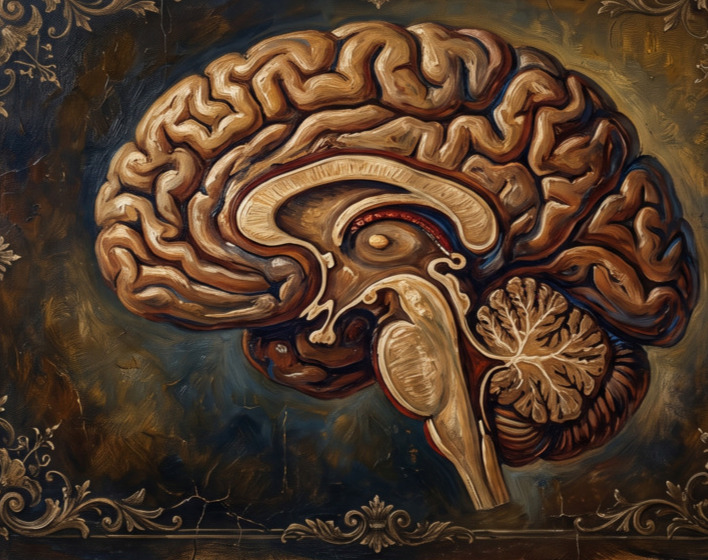
For most of medical history, the answer was: nothing much. Your brain at night was thought to be a quieter version of your brain by day. Same machine, lower voltage. That picture started falling apart in 2013. Researchers led by neuroscientist Maiken Nedergaard published a paper in the journal Science describing something new. During sleep, fluid moves through the brain in a very specific way — flushing through the spaces between brain cells, carrying out waste, and then draining away. They called it the glymphatic system. A kind of janitor service for the brain, mostly active at night. |
What gets cleaned | |
The original work was done in mice, and researchers are still mapping exactly how the system operates in living humans. But the core idea has held up across more than a decade of follow-up studies: your brain produces waste during the day, and most of it gets cleared while you sleep. Some of that waste is mundane — the byproducts of running a hundred billion neurons for sixteen hours straight. But some of it isn't. The cleanup carries out beta-amyloid, the same protein that builds up into plaques in the brains of people with Alzheimer's disease. And tau, the other protein associated with memory decline. |
|
Why deep sleep | |
The catch is that this cleanup mostly happens during deep sleep. Not the dream stage. The earlier, slower, heavier sleep most of us get in the first few hours of the night. Cleveland Clinic and Harvard Health both note that deep sleep is when the body releases growth hormone, tissue regenerates, and the brain's slow waves do their heaviest lifting. It's also the stage most easily disrupted — by heat, by alcohol, by a late night, by stress. |
This week | |
The Fourth of July is eight days away. Across the country there will be late dinners, fireworks at 10 p.m., a beer on the porch, maybe a second one. Schedules will shift. Heat will sit on the East Coast and the South. Air conditioners will hum all night. Sleep will get worse before it gets better. For a brain that depends on deep sleep to clear its nightly load, this is a difficult week. |
♦ ♦ ♦ |
A short checklist before you keep reading. |
Six questions. Yes or no. Count your yeses. |
|
|
♦ ♦ ♦ |
Your brain takes out the trash at night. Make sure you're not loading the truck faster than it can leave. Yours, Lily |
Sources this week |