The drawing that changed my sleep: neurons as dimmed lights
One small “dimmer” for your nervous system tonight
Hi, this is Lily Marigold.
This is not a story about the “perfect no‑screens evening.” It’s about one drawing that made me stop pretending that scrolling in bed past midnight is “just how it is” — and how that might matter for you too.
The drawing where I caught myself
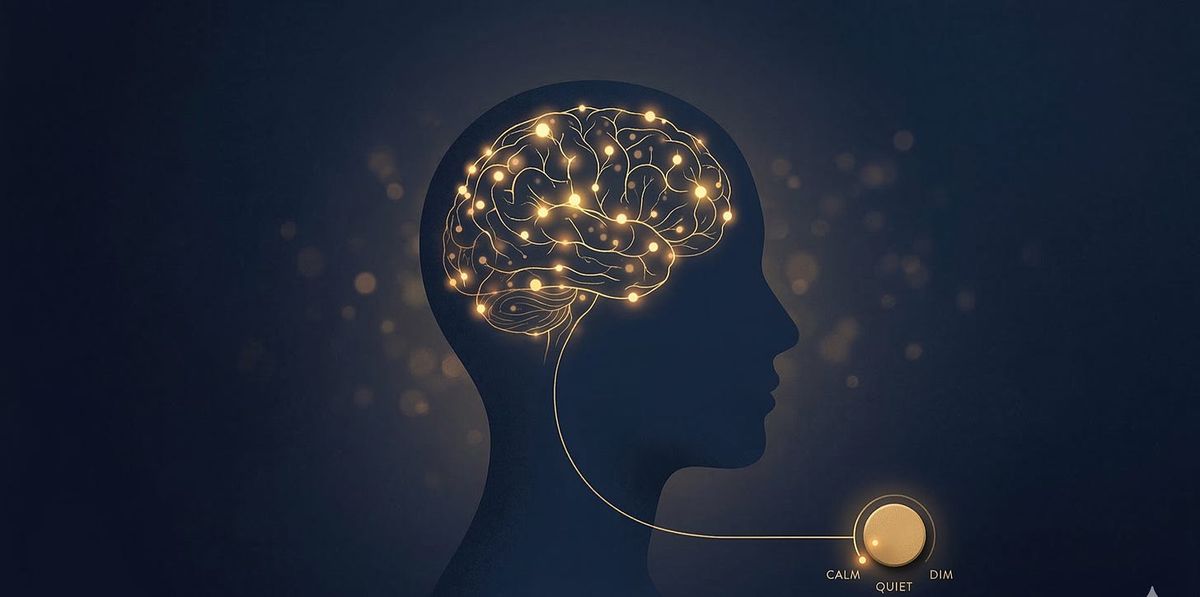
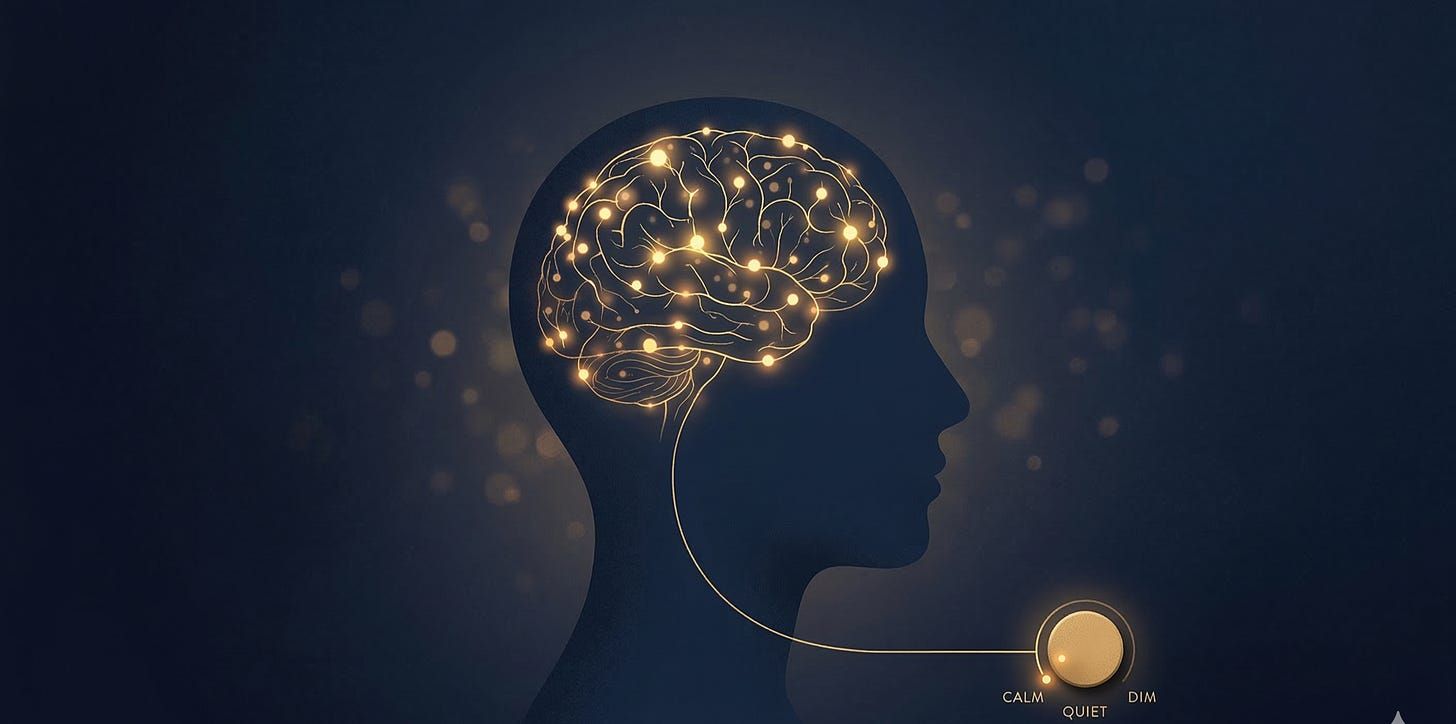
I was sketching a nervous system for my work: tiny neuron‑dots, thin lines between them, little sparks. At some point I realized I wasn’t drawing an abstract brain. I was drawing my evenings — hundreds of tiny lights, none of them willing to go off.
In real life it looked like this:
- I finished work,
- promised myself to “just unwind for a bit,”
- and then spent another hour or two dragging my mind through feeds, chats, videos.
My body was in bed, but the internal wiring was still on full daytime mode. The drawing said it in one sentence I hadn’t wanted to hear:
of course I can’t fall asleep — I keep shining a spotlight straight into my nervous system.
A little physiology, no lecture
You already know the basics: melatonin, blue light, screens and sleep. But here’s the short, adult summary that finally landed for me:
- Melatonin is not magic; it’s a signal that “the day is ending.” Bright screens late at night can delay when that signal gets strong enough. Not because you “don’t know how to relax,” but because your brain is still reading the environment as “daytime.”
- Most screens give off a light spectrum similar to daytime. They’re not poison, but when they’re close to your face and on for a long time at night, your brain gets a weird combo: your body is horizontal, but the light says “it’s noon.”
- Sometimes the issue isn’t total hours of sleep; it’s quality. You technically sleep, but more lightly and with micro‑awakenings, and you wake up feeling like someone quietly worked you overnight.
So often it’s not that “I’m weak and addicted to my phone.” It’s that my nervous system is honestly responding to the light and stimulation I keep feeding it.
Where this hits real life
Maybe this is familiar:
- you pick up your phone “for 10 minutes,”
- suddenly it’s 12:30 a.m.,
- you put it down with a mix of guilt and exhaustion,
- you fall asleep not from calm, but from being drained.
And then you have to get up like you didn’t live an evening; you just pulled another shift.
I can’t take away your workload, kids, news, or group chats. But I can offer one small, realistic “dimmer” you can actually try.
One evening dimmer for your nerves
Don’t promise yourself “no screens after 9 p.m.”
Try this, for just one night:
- Pick the last hour before you want to sleep — a time you already spend mostly at home.
In that hour, do two things:
- Room light:
Turn off the main ceiling light. Leave a lamp, a wall light, or a string of lights. Not romance — just fewer lumens in your eyes. - Screen light:
Turn brightness down to the lowest comfortable level, switch on night mode / warmer tones.
If you can, spend at least 15–20 minutes of that hour screen‑free: shower, book, journaling, laying out clothes for tomorrow, tidying one small corner.
The point isn’t to become “pure and screenless.” It’s to give your nervous system a bit of sequence:
first the room light softens, then screen light softens, and then you ask your mind to let go.
Watch what happens:
- Is falling asleep even slightly easier?
- Do you feel less like you “fell into your phone and lost the night”?
- Does the morning feel even one notch less brutal?
If you want, you can name it for yourself:
“My nervous system dimmer tonight was…” — and fill in the blank: lamp instead of overhead light, phone at lowest brightness, 20 minutes with a book, no news after 11 p.m.
It’s not magic. It’s just a small act of respect for the fact that your nervous system isn’t an endless spotlight — it’s a network that sometimes needs a clear signal: enough light for today.
Listening to the body,
Lily Marigold