When did you last feel steady on your feet without thinking about it?
Balance doesn't disappear overnight. It sends signals first.

Hi, this is Lily.
There's a moment most people don't notice until it's already happened.
You reach for something on a high shelf — and your hand grabs the counter without you deciding to.
You step off a curb — and something tightens in your core, just for a second.
You stand up quickly — and wait a beat before you start walking.
These aren't dramatic moments. They don't make it into conversations. But your body is keeping score.

What balance actually is — and why it quietly changes
Most people think of balance as a skill. Something athletic. Something you either have or you don't.
It's not.
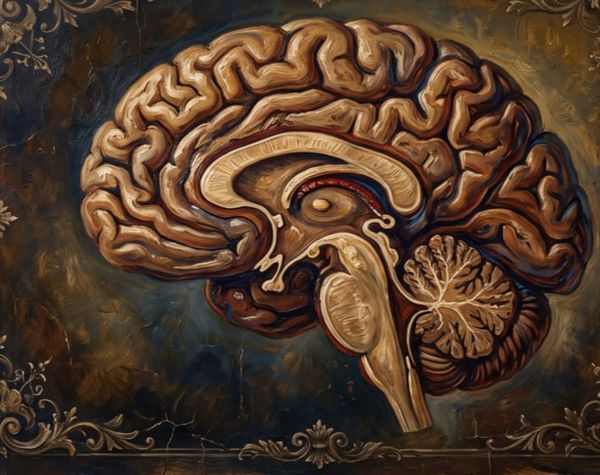
Balance is a conversation — happening constantly, below the level of your attention — between three systems in your body:
Your inner ear, which tracks where your head is in space. Your eyes, which confirm what the inner ear is reporting. Your feet and joints, which send signals up about the ground beneath you.
When all three agree, you move without thinking. When one of them slows down — as all three gradually do after 50 — the conversation gets harder to follow.
"Balance isn't something you lose. It's something that stops being updated."
The good news: it responds to practice faster than almost any other system in the body. Even small, daily inputs make a measurable difference within two to three weeks.
How do you feel about your balance these days?Quick self-check: how is your balance right now? |
Three signals your body sends before balance becomes a problem
Sometimes the body adapts quietly first. These small changes can be subtle, intelligent, and worth noticing.
01
You avoid certain shoes
Not because they hurt — but because something in them feels slightly unreliable. Heels you once wore without thinking. Sandals with thin soles. Flip-flops on wet floors. Your nervous system often makes this choice before your conscious mind does.
02
You touch walls and counters more than you used to
Not dramatically. Just a hand on the doorframe as you pass. A fingertip on the wall going down stairs. A light grip on the cart at the grocery store. These are not signs of weakness — they are your body being smart. But they are also information.
03
Your walking pace has quietly slowed
Especially on unfamiliar ground, in the dark, or when you are tired. Your brain may be adding a safety margin you never consciously requested.
The one-week balance reset — no gym required
These take under two minutes each. The research on them is surprisingly strong.
Monday / Wednesday / Friday: Stand on one foot while brushing your teeth. Not perfectly. Not still. Just try. Start with 10 seconds. Work toward 30. This single exercise is one of the most studied predictors of longevity in adults over 50.
Tuesday / Thursday: Walk heel-to-toe in a straight line — like a sobriety test, but in your kitchen. 10 steps forward, 10 steps back. If you need to touch the wall: that's data, not failure.
Every day: Before you get out of bed, circle your ankles 10 times in each direction. Your ankles send more balance signals to your brain than almost any other joint. Waking them up before you stand changes how your whole system starts the day.
Your Balance Checklist
A simple way to notice how your balance system is doing today.
Can you stand on one foot for 10 seconds with eyes open?
Can you stand on one foot for 5 seconds with eyes closed?
Can you walk heel-to-toe for 10 steps without touching anything?
Do you feel steady stepping off a curb without looking down?
Can you turn your head side to side while walking without slowing down?
If you checked all five: your balance system is communicating well.
If you missed two or more: your body is asking for a few minutes a day. Nothing more than that.
"The body doesn't ask for much. Just enough attention to remind it that you're still in the conversation."
One more thing.
Falls are the thing nobody talks about until they happen to someone they know. Then suddenly everyone has a story.
I'm not writing this to scare you. I'm writing this because the gap between "fine" and "a close call" is smaller than most people think — and wider than most people realize once they start paying attention.
Two minutes a day. One foot at a time. Your body will remember what to do.
Listening to the body
Lily Marigold