Your brain is wired to ruin your sleep. Here's how to fight back
What constant bad news does to your body at night — and how to gently undo it

Hi, it’s Lily.
If lately it feels like there’s a 24/7 news channel running inside you — and it always picks the worst stories — this note is for you. You don’t have to blame yourself: the brain is wired to hold on to bad news several times more strongly than good, but your body pays the exchange rate in tension, fatigue, and sleepless nights.
Why the brain clings so hard to the bad
Psychologists call this negativity bias: our nervous system gives more weight and attention to negative information than to positive or neutral. In books on the emotional brain and in modern review articles, the same line keeps coming back: for our ancestors, it was more important to notice a threat than to admire a sunset.
What’s happening inside:
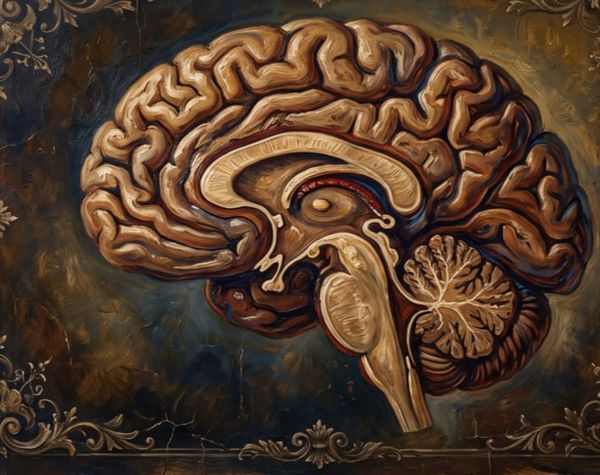
- Deep in the brain sits the amygdala, your fast “danger detector”. Experiments show it reacts stronger and faster to negative images and headlines than to positive ones — bad news literally lights up more circuits.
- Brain‑imaging studies find that negative information activates larger and more widespread networks than positive information, and holds attention longer. That’s why one criticism can drown out a hundred compliments.
- Research on rumination — mentally chewing on bad events — shows that repeating negative thoughts lowers the threshold for sensing threat: the stress system fires faster, cortisol spikes harder, even when the real‑world event is minor.
Long ago, this wiring saved lives: the person who heard a rustle in the bushes and thought “maybe that’s a predator” lived longer than the one who stayed absorbed in the beauty of the sky. Today there are fewer predators, but the brain is still following the old instruction manual: “spot danger first, everything else later.”
How a stream of bad news lives in your body
Stress medicine and mental‑health pieces about news exposure keep describing the same chain: bad input → brain reads “threat” → body flips into fight‑or‑flight, even if you’re just scrolling on your couch.
Here’s what that looks like:
- Heart.
The amygdala signals the hypothalamus, your “stress command center”. The sympathetic nervous system kicks in, adrenaline is released. Your heart speeds up, blood vessels narrow — you feel this as racing pulse, pressure, tightness in the chest. - Breathing.
Under psychological strain, breathing becomes faster and shallower — classic stress breathing. A few minutes of that is fine; dozens of “micro‑storms” a day can leave you in a state of ongoing half‑breath and brain fog. - Muscles.
Stress hormones raise muscle tone, especially in the neck, shoulders, jaw, and lower back. With little physical movement to discharge it, this freezes into chronic tightness and pain. - Stomach and gut.
In fight‑or‑flight, your body shifts blood away from digestion and toward your heart and muscles. You feel that as heaviness after eating, bloating, cramps, flares of reflux or IBS. - Sleep.
Taking in negative content in the evening is linked to poorer sleep quality, more anxiety, and more “night‑time overthinking”. A brain that spent the last hour of the day in “breaking news” mode doesn’t slip easily into “deep repair” mode.
Your body doesn’t care whether something is happening right now in your room or only on your screen. It hears “threat” and does its job.
What you can do without pretending “this doesn’t affect me”
We can’t — and don’t need to — turn off the negative filter. But we can:
- change how much and when we feed it bad news
- give the body counter‑experience: moments of safety, grounding, and “nothing bad is happening right now.”
Here’s a one‑week experiment. Pick just one step.
1. A boundary for bad news before bed
Sleep and mental‑health guidelines keep coming back to this: even 60 minutes without heavy content before bedtime can noticeably improve falling asleep and sleep quality.
Your version might be:
For the last 60 minutes before I lie down, I don’t open news or difficult conversations.
You can:
- read something light
- watch a non‑triggering show
- listen to music, stretch, or do a simple wind‑down task
The goal isn’t a perfect evening, it’s giving your amygdala at least one hour without fresh “this is terrible” alerts so your body can start shifting into repair mode.
2. One tiny body “anchor” after each heavy headline
It’s not enough to catch the thought — you need to drop some attention into the body and breath. That lowers the stress system’s reactivity and gives the brain a route other than “think about this again.”
Try this rule:
Each strong bad news = one small act for my body.
For example:
- You read something heavy → stand up, place your feet on the floor, and take 10 slow breaths, really feeling the contact with the ground.
- You finish an anxious conversation → put a hand over your heart and track its beat for 1–2 minutes without analyzing.
- You catch your mind replaying a negative comment → for one minute, scan jaw, shoulders, belly and gently release at least one of those “locks.”
These are tiny switches that tell your nervous system, “that event is over; right now, in this room, you’re allowed to soften.”

3. A small “good news bank” inside your day
In his book Hardwiring Happiness, Rick Hanson writes about how positive experiences need a few extra seconds of attention to really “land” in the brain. Otherwise, negativity wins by default.
For one week, try an evening practice:
- Write down one small good thing from the day.
Not “life changed”, just:
a cup of tea that was genuinely comforting;
a message that warmed you;
light on the wall at a certain hour;
a moment where you did set a tiny boundary. - Close your eyes and stay with it for 20–30 seconds.
Recall how it felt in your body, the colors, sounds, maybe the smell.
You’re not denying the bad. You’re giving your brain a chance to register the good — and your nervous system a few seconds where it doesn’t have to be on high alert.
A 7‑day check‑in with your inner news anchor
To see this not just as theory but in your own life, turn it into a 7‑day observation:
- Choose your step: 1, 2, or 3.
- Each evening, write two short lines:
- “Today my mind was mostly full of…” — scary stories / neutral things / something warm.
- “Today my body feels…” — tight, depleted, a bit lighter, calmer, heavy.
- At the end of the week, look without sugar‑coating:
- did falling asleep get even slightly easier?
- were there fewer moments of your heart jumping “out of nowhere”?
- was there at least one day when your inner news anchor spoke a little more softly?
We can’t rewrite the old brain program that says “spot the danger first.”
But we can choose to feed it fewer false alarms and, piece by piece, give our bodies more true experiences of “right now, in this moment, I’m safe enough.”
Tell me in the comments: 1, 2, or 3 — which small step are you willing to begin with, so your brain holds on a bit less tightly to the bad and your body gets to breathe a little easier?
Listening to the body,
Lily Marigold