Your hands are aging faster than the rest of you. Here's why.
Your fingers have been trying to tell you something.

Your hands are not just tools.
They are a daily diary of how you live, how you age, how you care (or forget to care) for yourself. And yes, they have been quietly trying to tell you something.
Hi, this is Lily.
Maybe you’ve noticed: some days your fingers suddenly feel “wooden”, the mug slips, buttoning a shirt turns into a mini‑quest, and typing a message on your phone is full of odd mistakes — even though your mind feels perfectly clear.
That’s not a sign of “I suddenly got old.” More often it’s a sign that your hands are tired of running on autopilot — with no attention, no warmth, no care.
Your hands remember:
- the hours scrolling on your phone in bed;
- the heavy bags you carry because “who else is going to do it”;
- the days when you didn’t give yourself even 3 minutes just to stretch and unclench your fists.
With age, that memory becomes visible: joints thicken, movements lose their lightness, fine motor skills are not as effortless as they used to be. It’s not a punishment. It’s your body’s language: “slow down, look at me.”

A bit of science: why small movements matter
Your brain and your hands have been in cahoots for a long time.
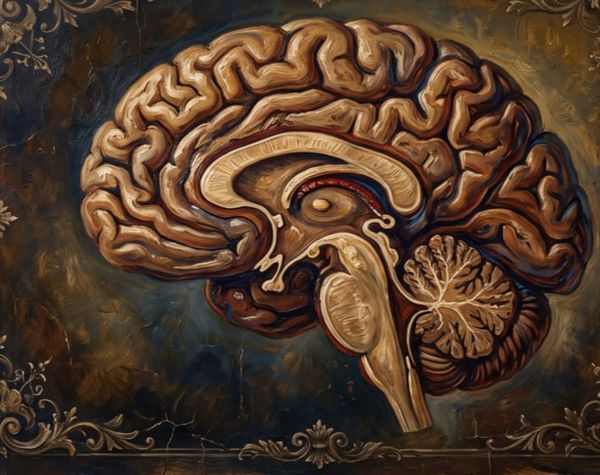
The area of the brain responsible for your hands and fingers takes up a surprisingly large amount of “space” — we are literally wired for fine hand work.
When you do small, precise movements — buttoning a shirt, chopping vegetables, threading beads, playing an instrument, shaping dumplings — your brain gets a rich signal: “I’m in touch with the world, I can do this, I’m alive.”
When most of your hand gestures shrink down to three:
holding your phone, clicking a mouse, typing,
something else happens:
- the input your brain gets becomes poorer and more repetitive;
- joints move only in the same few little tracks;
- some muscles stay over‑tense, others barely work at all.
With age, this shows up faster as:
- morning stiffness until you “loosen up”;
- tingling or numbness, fingers that feel “cottony”;
- a quiet fear: “my hands just aren’t what they used to be,” which easily turns from an observation into a verdict.
I’m not inviting you to fight aging.
I’m inviting you to gently return movement to the places that need it most: the small gestures that nourish both your joints and your brain.
Three quiet things your hands might be telling you
See if you recognize yourself in any of this.
- “I feel cramped.”
Constantly clenched fists, fingers that have learned to hold your phone like a life raft. Your hands are tense even when you’re “just sitting.”
Often there’s a background level of anxiety underneath: the body ready to grab on — to a door handle, a bag, control. - “I’m tired of silence.”
Your hands hardly do anything except press buttons and swipe screens. No craft, no play, no “touching the world” — just plastic and glass.
Your brain then loses the rich sensory input that keeps it flexible, focused, and grounded in “I can.” - “I’m aging faster than I need to.”
Morning stiffness, “weather joints” that ache before the rain, a reluctance to lift, twist, or open anything that looks even slightly resistant.
It’s not always about serious disease. Often it’s about joints that haven’t had attention, warmth, and sensible movement in a long time.
If you recognized yourself in even one of these — it’s not a sentence. It’s an invitation: “please notice me.”
One week with your hands: a simple experiment
Not “fix your hands forever.”
Just one week of living with them more consciously. Choose one small practice and stay with it for 7 days.
1. Morning: 30 seconds for your joints
Before you reach for your phone, let your hands be the first ones to get your attention.
- Slowly clench and unclench your fists 10 times.
- Gently “roll” each finger joint, as if you were checking a ring on every finger.
- Make slow circles with your wrists in both directions.
This is not a performance. It’s a feeling.
A tiny “good morning” for your joints and your brain: we are still moving, we are still here.
2. Day: one small act not for productivity, but for contact
Once a day, do something with your hands that is not about getting things done, but about feeling.
For example:
- peel an orange slowly, really noticing the skin, the texture, the smell;
- run dry grains or beans through your fingers and feel them flow across your palm;
- write three lines by hand in a notebook instead of typing;
- fold a napkin carefully, corner to corner, with almost childlike precision.
Let it take 2–3 minutes. Then ask yourself:
“What do I feel right now in my fingers? In my palms? In my chest?”
Not for usefulness. For contact.
3. Evening: a warm ritual for your joints
Before sleep, instead of one more scroll, give your hands a small warm gesture.
- Apply cream or oil slowly, massaging each finger, the back of your hand, your wrists.
- Imagine you’re not just “moisturizing dry skin,” but thanking them for the day: for everything they held, cooked, typed, carried, stroked.
- Shake out your hands gently, as if you were shaking off water: “I’m letting go of what I’ve been holding all day.”
It’s not a magic spell.
But your nervous system understands these kind, repeated signals very well: it’s safe here, you can soften a little.
Aging hands without shame
Hands age. That’s a fact, not a failure.
Veins stand out more, skin gets thinner, little spots appear — the very ones commercials love to label as a “problem.”
For your body, this is not a catastrophe. It is its way of saying: “I’ve been with you for a long time.”
You can look at your hands as a betrayal in the mirror.
Or you can look at them as a chronicle: how many times they held someone’s hand in a hospital, how many pots and bags and plates and school notebooks for children and grandchildren they’ve lifted, how many times you used them to wipe away tears — yours and someone else’s.
Your job is not to give them back their 25‑year‑old look.
Your job is to help them travel the rest of the road with movement and with as little pain as possible:
- keep as much joint flexibility as is realistically available;
- reduce everyday stiffness where you can;
- not let shame about “old hands” cut you off from touch.
Because as soon as we start hiding our hands — in long sleeves, in pockets, behind “I don’t like how they look” — we often hide, along with them, our desire to touch:
we hug less, stroke someone’s back less, cook for ourselves with care less, create less.
Everyone’s hands age.
But how they age — in tension and shame, or in movement and gentleness toward yourself — is something we can still nudge, just a little. With small gestures, day after day.
A small check‑in for you and your hands
For the next 7 days, in the evening, answer two short questions (in your phone notes or a notebook):
- “What did my hands do today, besides my phone and the dishes?”
- “How do my fingers and wrists feel right now: tight, free, alive, tired?”
After a week, look honestly:
- Is it even a little easier to unclench your fist in the morning?
- Has at least one small gesture appeared that brings your fingers a bit of joy?
- Has anything changed in the way you look at your hands in the mirror?
Your hands are not asking for a perfect exercise routine.
They are asking to be noticed — not only when they hurt, but also while they can still quietly, in their own way, say: “I’m with you. I’m holding this life together with you.”
Listening to the body,
Lily Marigold
Slow down aging at the biological level.

Aramore is a completely new approach to skincare—one that helps your body produce more NAD+, the vital co-enzyme responsible for our cellular health and how we age.
See firmer, more radiant, more resilient skin in just 28 days. Get 20% off your first order with code NEWSLETTER20.